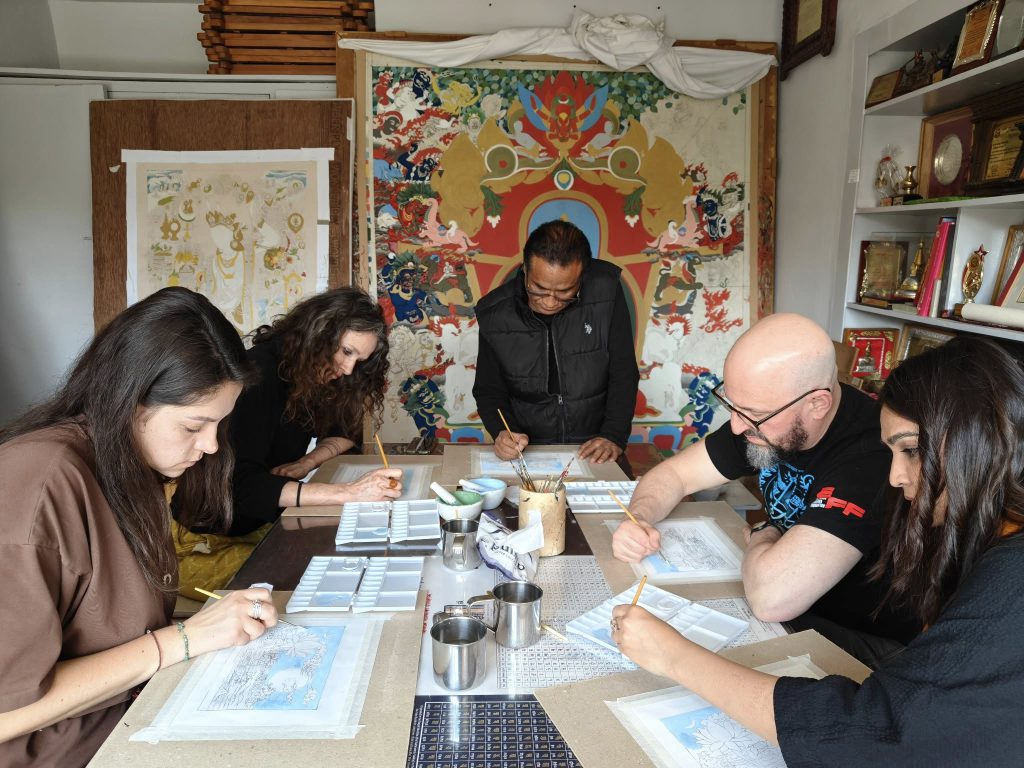
In the heart of Patan, where the streets echo with centuries of devotion and craftsmanship, Lok Chitrakar stands as a living vessel of Nepal’s ancient art traditions. His mastery of Paubha — the traditional Newar form of Tangka painting — goes far beyond brushwork; it is a spiritual journey rendered in color and symbolism.
“Every line, every shade must serve a purpose,” says Lok Chitrakar. “It’s not just art. It’s prayer.”
Chitrakar’s journey began at a young age, inspired by the intricate visuals on temple walls and the meticulous work of his elders. Over time, his dedication transformed into an artistic philosophy — one rooted in discipline, cultural reverence, and meditative practice.
The Paubha Philosophy
Paubha, like Tibetan Thangka, is more than visual beauty. It’s a sacred diagram — a visual scripture meant for worship and meditation. Chitrakar’s adherence to traditional iconography, mineral pigments, and gold detailing preserves the authenticity of this craft, even as he gently pushes boundaries through subtle personal touches.
“Innovation,” he explains, “must not break the soul of tradition — only elevate it.”
A Legacy of Devotion
His artworks have not only graced local monasteries and museums but have also been exhibited globally — from Japan to Europe — opening the world’s eyes to Nepal’s spiritual art heritage. Through his studio, Simrik Atelier, he also trains the next generation of artists, ensuring the lineage continues with integrity.
More Than a Painter
Lok Chitrakar is a storyteller, philosopher, and cultural guardian. His brush carries not just pigment, but centuries of unbroken tradition. In an age of digital pace and fleeting attention, his work invites us to pause, reflect, and reconnect with the sacred.